Museum Island
Back to all places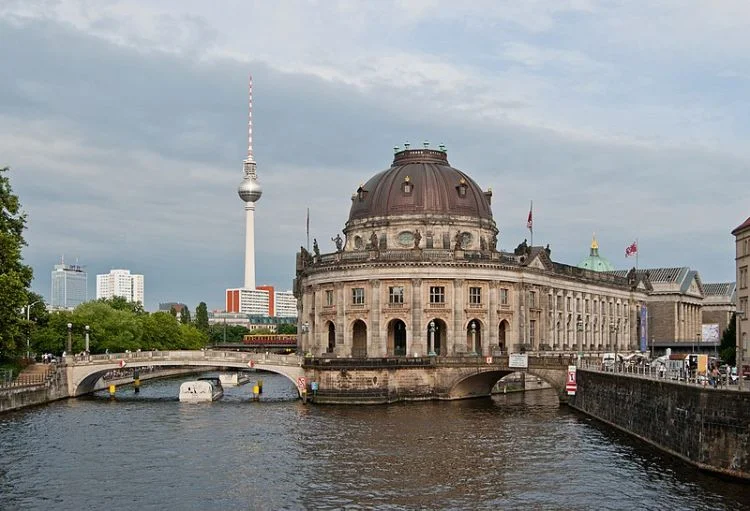
Berlin’s Museum Island is a grand work of art: five world-famous museum buildings from the time of the Prussian rulers, together with the modern James Simon Gallery, form an exciting ensemble that was awarded UNESCO World Heritage status in 1999. In 1999, the Museum Island master plan was also adopted. The core of this is an underground connection, the Archaeological Promenade, to be built between the museum buildings. The Museum Island is also home to the world-famous bust of Nefertiti, which is over 3,000 years old.
The Altes Museum (Old Museum) is located at Lustgarten, directly opposite the Berlin Cathedral and the new Humboldt Forum. With its opening in 1830, historically significant collections and artworks were made accessible to the general public in Berlin for the first time. The idea of a museum open to everyone goes back to the Enlightenment and its educational ideals. Karl Friedrich Schinkel, Prussia’s most important architect, provided the designs. Over the next 100 years, a total of five museums were built on the site. And at the end of the 1870s, Berlin’s Museum Island received its current name.
By 1855, a second impressive museum building was erected according to the plans of Friedrich August Stüler: the Royal Prussian Museum, today’s Neues Museum (New Museum). In 1876, the Alte Nationalgalerie (Old National Gallery), with architecture reminiscent of a Greek temple and incorporating Stüler’s designs, opened its doors. It took until the beginning of the 20th century to complete the ensemble. In 1904, the neo-baroque Kaiser Friedrich Museum at the tip of the Museum Island, today’s Bode Museum, opened. And in 1930, the Pergamon Museum was added as the last of the five large museum buildings. The Nazis planned a gigantic conversion, which fortunately could not be implemented. After the war, Museum Island was a landscape of ruins, the Neues Museum in particular was almost completely destroyed. Reconstruction began during GDR times, but the Neues Museum still remained a ruin.
In 1999, 10 years after the fall of the Berlin Wall, the Board of Trustees decided on a comprehensive restoration of the ensemble, entitled Museum Island’s master plan. This included the reconstruction of the Neues Museum and the restoration of the other museums. In addition, the individual museum buildings, each of which faces a different direction, were to be connected to form one large, unified whole. A modern central entrance and exhibition building, the James Simon Gallery, has been welcoming guests since July 2019.
The British star architect David Chipperfield accepted the commission for planning the James Simon Gallery. His firm David Chipperfield Architects had already overseen the reconstruction of the Neues Museum. James Simon (1851-1932), a Jewish citizen in Berlin and a passionate art collector, now receives special recognition for the first time: he was the most important patron of Museum Island, who provided Berlin’s museums with extensive collections. His most famous transfer of ownership to Museum Island is under the northern dome in the Neues Museum: the bust of Nefertiti. The Archaeological Promenade will connect four of the five museums and exhibit important objects from the art collections.
https://www.visitberlin.de/en/museum-island-in-berlin
Photo: kaʁstn Disk/Cat
52.51693, 13.40190