Museum Knoblauchhaus
Back to all places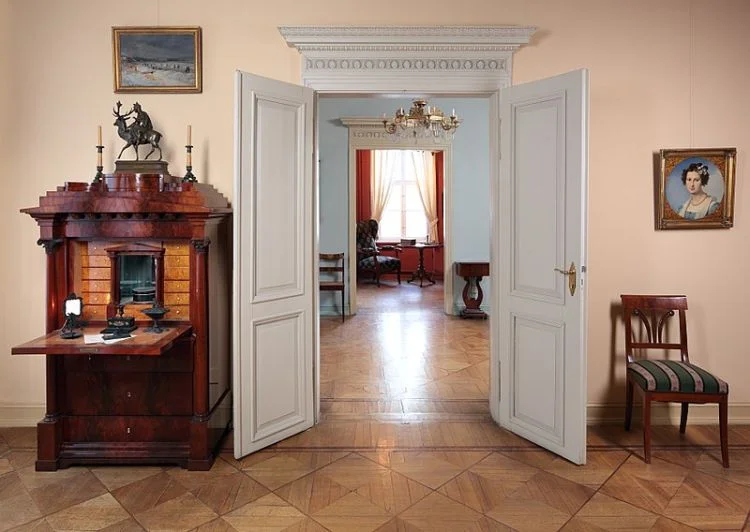
Berlin at the time of the Biedermeier: the Knoblauchhaus brings this era to life with original pieces of furniture and everyday objects.
In one of Berlin’s most beautiful houses, you travel back to the time of the Biedermeier: embark on a journey with the wealthy Knoblauch merchant family. Reconstructed rooms with original furniture offer insights into everyday period life and home decor. For 170 years, the house functions as an important residential and business centre hosting family gatherings and social activities. Celebrity guests, such as the famous architect Karl Friedrich Schinkel and educational reformer Wilhelm von Humboldt, visit. Thus, the house is a place of historical significance.
In 1761, Nadlermeister Johann Christian Knoblauch builds this three-story corner house in the late Baroque style. It serves not only as a residence but also as an office for the Knoblauch family. From 1821-1918 a family museum is located in the main floor. After that, the entire building becomes a tenement house again, before becoming a venue space in 1989. Since then, it offers a vivid insight into style, culture and history of the Biedermeier years between 1815 and 1848. Enter via a narrow spiral staircase to the first floor, dedicated to the family. The rooms are authentically furnished, as if the family have only just left the house. In the living room are everyday objects and furniture belonging to Henriette Knoblauch, wife of Carl Knoblauch. The furniture of a lady, that is: the writing desk and dressing table, display the functional side of the Biedermeier period. The library tells of long-time house master Carl Friedrich Wilhelm Knoblauch, and his achievements in politics. Carl’s brother, Eduard Knoblauch, is a famous architect and student of Karl Schinkel. An original bookcase belonging to him is located in the entrance room. The decoration of the house is typical of this time: very simple and modest. A chandelier designed by Schinkel also reflects discretion: its golden splendour is made from inexpensive substitutes. Also, note the green flowers in the window. Although now so commonplace, this style originated here. On the second floor, you pass through the smaller rooms belonging to the Knoblauch family, learning about the social life, architecture and politics of Berlin through objects, pictures and official documents.
https://www.visitberlin.de/en/museum-knoblauchhaus-stadtmuseum-berlin
Photo: Michael Setzpfandt
52.51640, 13.40697